International Students
 Play International Students video
Get to Know Houston
International Student Support Resources

Find out how you can maintain your F-1 student visa status and study in the US.

Must-Have Documents
Passport
F-1 Visa
I-94 Card
When you enter the United States, U.S. Customs and Border Protection has automated Form I-94 at the port of entry. A traveler lawfully admitted (or paroled) into the U.S. may print their lawful record of admission (I-94 form) from the CBP website.
Form I-20
This is the form San Jacinto College gives you when you’ve completed all your requirements for admission. Keep this with you at all times, even when you leave the U.S. temporarily. It serves as validation of your student status and shows all permissions granted to you, such as transfers, employment, and reentry to the U.S.
Frequently Asked Questions
At San Jacinto College, students who hold an F-1 student visa are considered international students.
An F-1 student is a nonimmigrant who is pursuing a full course of study for a specific educational or professional goal at a U.S. college or university approved by the Department of Homeland Security (DHS). These institutions are authorized to enroll international students through the Student and Exchange Visitor Information System (SEVIS).
International students cannot enroll in the following programs:
- Maritime Transportation
- Health Information Technology *
- Culinary Arts *
- Accounting (A.A.S program only) *
- Business Office Systems & Support *
- Computer Information Technology- Cloud Computing, Cybersecurity *
*International students are prohibited from enrolling in programs that are mainly offered online*
San Jacinto College does not require F-1 students to purchase health insurance. However, because medical care in the U.S. can be expensive, we strongly recommend that you have health insurance while attending San Jacinto College.
Your designated school official can provide information about health insurance providers.
F-1 students must enroll in and complete at least 12 semester credit hours each fall and spring semester, as required by U.S. Citizenship and Immigration Services (USCIS).
If you are a new F-1 student entering the U.S. for the first time in the summer, you must enroll in 12 credit hours during the summer term.
Taking fewer than the required number of credit hours may cause you to fall out of F-1 status and face penalties from USCIS, up to and including deportation.
Yes. F-1 students may take online classes as part of their course load. You must enroll in at least 12 credit hours each semester, with at least 9 credit hours taken in face-to-face or hybrid classes. Up to 3 credit hours may be taken online.
Yes. All first-time-in-college students must attend New Student Orientation before registering for classes.
Transfer students with fewer than 11 credit hours must also attend orientation. After you meet with an international student advisor, you will receive additional guidance.
All new F-1 students must also attend International Student Orientation, which is held two weeks after the semester begins. During this orientation, you will meet other new students, learn about F-1 visa regulations and campus resources, and receive your I-20.
DSO stands for designated school official. A DSO is responsible for reporting and updating information about an F-1 student's status to U.S. Citizenship and Immigration Services (USCIS).
International students are charged out of state and other non-resident tuition and fees. You may review tuition & fees for more information.
Federal financial aid is not available to international students. You must have enough funds to cover your expenses while attending San Jacinto College, including tuition, fees, books, housing, transportation, living expenses, travel and other related costs.
However, international students with an F-1 visa are eligible for the Texas Public Grant (TPEG) Application for International Students often referred to as TPEG International. TPEG International is state financial aid. For more information visit International Student Services or the Financial Aid Office.
Yes. Accessibility Services at San Jacinto College provides free support to students with disabilities. Services may include note-taking assistance, sign language interpreters, quiet testing rooms and extended test time. Documentation of your disability is required to receive services.
Visit Accessibility Services or call 281-922-3444 for more information.
San Jacinto College considers all applicants without regard to race, creed, color, sex, age, national origin or disability.
No. San Jacinto College does not provide housing to students. However, apartment buildings are located within walking distance of the college. In addition, many private parties advertise rooms for rent on bulletin boards around campus.
Yes. Even though you may have a valid F-1 visa and I-20 from another school, you will still need an I-20 from San Jacinto College.
Important:
In order for you to receive an I-20 from our college, you must complete the international admissions transfer process and receive an acceptance letter from our college.
The Student and Exchange Visitor Program (SEVP) is designed to help the Department of Homeland Security (DHS) and Department of State better monitor school and exchange programs and F, M and J category visitors.
The Student and Exchange Visitor Information System (SEVIS) is an online system that maintains current information about international students, exchange visitors and their dependents in the United States. This includes students with F and M visas, exchange visitors with J visas, and their dependents with F-2, M-2 or J-2 visas.
SEVIS allows schools and program sponsors to report required information and updates to the U.S. Department of Homeland Security (DHS) and the U.S. Department of State (DOS) throughout a student's or exchange visitor's stay in the United States.
A citizen of a foreign country who seeks to enter the United States (U.S.) generally must first obtain a U.S. visa, which is placed in the traveler’s passport, a travel document issued by the traveler’s country of citizenship.
Certain international travelers may be eligible to travel to the U.S. without a visa if they meet the requirements for visa-free travel. The visa section of this website is all about U.S. visas for foreign citizens to travel to the U.S.
(Note: U.S. citizens don’t need a U.S. visa for travel, but when planning travel abroad may need a visa issued by the embassy of the country they wish to visit. When planning travel abroad in this situation and to learn about visa requirements by country, see Country Specific Travel Information in the International Travel section of this website.)
How Can I use a Visa to Enter the U.S.?
Having a U.S. visa allows you to travel to a port of entry, airport or land border crossing, and request permission of the Department of Homeland Security (DHS), Customs and Border Protection (CBP) inspector to enter the U.S. While having a visa does not guarantee entry to the U.S., it does indicate a consular officer at a U.S. embassy or consulate abroad has determined you are eligible to seek entry for that specific purpose. DHS/CBP inspectors are responsible for admission of travelers to the U.S., for a specified status and period of time. DHS also has responsibility for immigration matters while you are present in the U.S.
What Types of Visas Are There?
The type of visa you must obtain is defined by U.S. immigration law, and relates to the purpose of your travel. There are two main categories of U.S. visas:
- Nonimmigrant visas – For travel to the U.S. on a temporary basis. Learn more.
- Immigrant visas – For travel to live permanently in the U.S. Learn more.
For more information, visit U.S. Visas, U.S. Department of State, Bureau of Consular Affairs.
Student Acceptance at a SEVP Approved School
Before you can apply at a U.S. Embassy or Consulate for an F or M student visa, you must first apply to and be accepted by an SEVP approved school. Visit the Department of State website, EducationUSA, to learn about educational opportunities for undergraduate and graduate study, opportunities for scholars, admissions, and more. You can also visit the DHS Study in the States school search page to search for SEVP-certified schools.
When you are accepted by the U.S. school you plan to attend, you will be enrolled in the Student and Exchange Visitor Information System (SEVIS). You must pay the SEVIS I-901 Fee. The U.S. school will provide you with a Form I-20 to present to the consular officer when you attend your visa interview. If your spouse and/or children intend to reside with you in the United States while you study, they must obtain individual Form I-20s, but they do not pay the SEVIS fee. Visit the U.S. Immigration and Customs Enforcement (ICE) Student and Exchange Visitor Program (SEVP) website to learn more about SEVIS and the SEVIS I-901 Fee.
How to Apply
There are several steps to apply for a visa. The order of these steps and how you complete them may vary at the U.S. Embassy or Consulate where you apply. Please consult the instructions available on the embassy or consulate website where you intend to apply.
Complete the Online Visa Application
- Online Nonimmigrant Visa Application, Form DS-160 – Learn more about completing the DS-160. You must: 1) complete the online visa application and 2) print the application form confirmation page to bring to your interview.
- Photo –You will upload your photo while completing the online Form DS-160. Your photo must be in the format explained in the Photograph Requirements.
When you enter the United States on a student visa, you will usually be admitted for the duration of your student status. That means you may stay as long as you are a full time student with a valid I-20, even if the F-1 visa in your passport expires while you are in the U.S.
Your passport must be valid at all times in order to remain in the U.S.
Yes, as long as you have not violated your student status, you may legally remain in the United States with an expired F-1 visa. However, if you exit the U.S., you must have a valid visa for re-entry.
No. For more information about visa applications visit the Department of State website at http://travel.state.gov/.
On-Campus Employment
F-1 students may work in on-campus jobs as long as the job does not displace a U.S. citizen or lawful permanent resident (LPR). You may work up to 19.5 hours per week while school is in session.
You may work full time when school is not in session or during your annual break, with your supervisor's approval. Failing to follow these employment limits may violate your F-1 status and could require you to leave the United States.
Off-Campus Employment
F-1 students enter the United States to pursue their education and must show that they have enough money to cover their educational and living expenses. You should not plan to work off campus to cover these expenses.
Off-campus employment is generally not permitted. It may be authorized only in limited circumstances, such as severe economic hardship that occurs after you begin your academic program or an emergency situation recognized by the U.S. Department of Homeland Security (DHS).
Yes. A U.S. Social Security number (SSN) is issued to people who are authorized to work in the United States. Employers use SSNs to report your wages to the U.S. government, and they are also used to determine eligibility for Social Security benefits.
If you are in the United States as an F-1 student and do not have authorization to work on campus, you cannot apply for a Social Security number. The Social Security Administration does not issue SSNs simply for enrolling in college or school.
Please speak with International Services before applying for a Social Security number.
If you fall out of F-1 student status, you may need to leave the United States and re-enter with a new I-20 to re-establish your status. You may also be able to request reinstatement through the U.S. Department of Homeland Security.
Contact International Student Services immediately for guidance on your options.
We recommend arriving in Houston about 30 days before your program begins so you have time to settle in before classes start. If you are a new F-1 student, you may not enter the United States more than 30 days before the program start date listed on your I-20.
After you enter the United States, you must report your arrival to International Student Services at the San Jacinto College South Campus.
You must keep track of the program end date on your I-20 and request an extension before that date if you need more time to complete your program. You may be eligible for a one-time extension, but the request must be made before the end date on your I-20.
Meet with International Student Services to review your options and determine how much additional time you may need. Your designated school official (DSO) will provide guidance and help you with the process.
If you do not extend your program before your I-20 expires, you may lose your F-1 status. This requirement applies regardless of which institution you attend.
F-1 students may travel outside the U.S. when the semester is not in session. Before you leave the U.S., you must have a valid travel signature on your original I-20.
We recommend visiting International Student Services to get your travel signature at least three weeks before your trip. If you are traveling between semesters, you must register for classes for the following semester before requesting a travel signature.
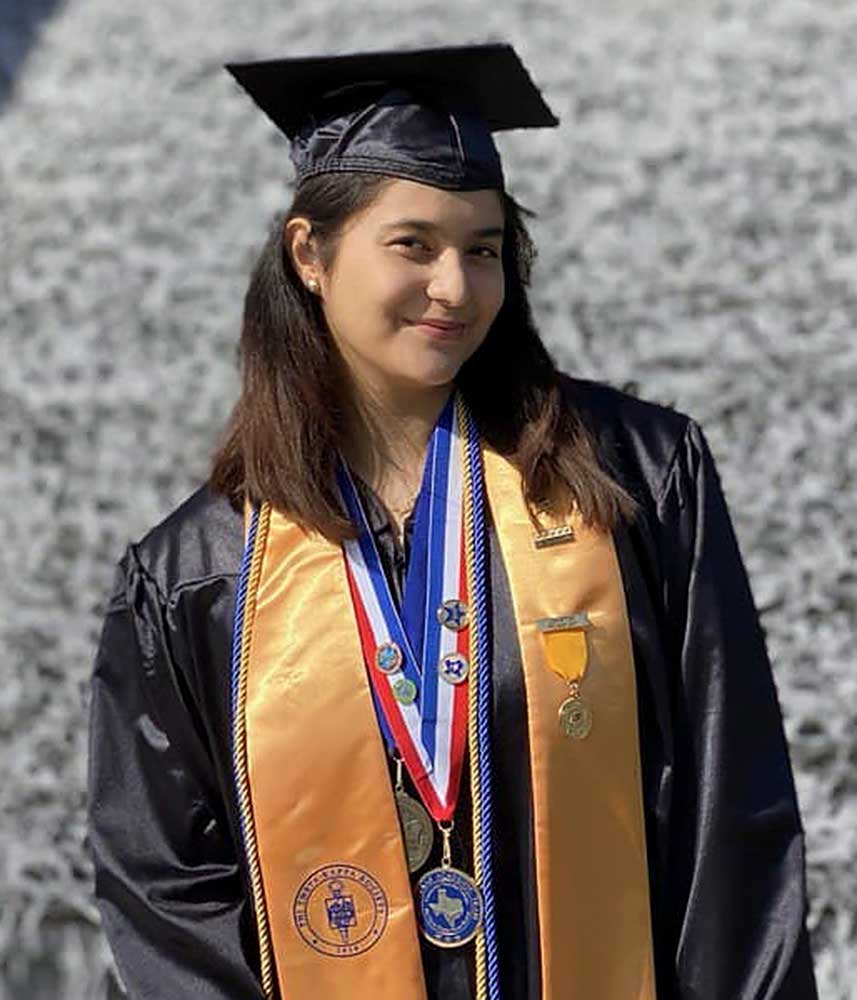
Sadokat Khakimova
find Us on Social
Connect with us on social media to keep with upcoming events, resources, tips, and everything else happing for F-1 International Students!